Lodd
A plumb bob hanging still on its line, with the sea and the horizon behind it

Lodd checks that the plan holds.

Lodd is the planning agent in Wellplanner. It checks every job against its own dates, drafts the changes a planner would make, and answers questions in Norwegian or English. A person applies every change.

In testingBuilt in Wellplanner and off until a company switches it on.

Why Lodd

Three jobs planners do by hand today.

Lodd does the checking and the first draft. Your people keep the decisions.

01Clashes

A tool booked on two jobs is found before it ships.

Today
Planners compare the schedule with the fleet by eye. A serial booked on two jobs whose dates overlap is often found when the second job asks for it.
With Lodd
Lodd counts every booking against each job's own dates. It names the clash, both jobs and up to two free serials of the same part.
What you get
A warning while there is still time to swap, with the rows Lodd read and the person who owns the fix.

For planners and project engineers.

02Readiness

What is not ready is listed by the date it matters.

Today
Certificates, maintenance, QA sign-off, crew courses, shipments and stock live on different screens. Someone checks them by hand before each job.
With Lodd
Lodd checks each job against its start, its ship date and its end, from a certificate that runs out before the end to reserved stock that is not on the shelf.
What you get
One list per job and per person: on the job, under Readiness and on the home page.

For project engineers, the workshop and crew coordinators.

03Changes

The work after a change is drafted for you.

Today
When a start date moves, tools, shipments and crew are rebooked by hand. A customer's email is typed into a new job. Closeout means chasing run records, tickets and tools.
With Lodd
Lodd drafts the rebooking, the job from the email, an assembly from free tools, and the chasers and the return shipment at closeout.
What you get
A proposal that lists each change and why, to review and apply in one step instead of a blank form.

For planners, sales and project engineers.

What Lodd does not do

  • It changes nothing on its own. A person applies every change.
  • It sends nothing: no email, no message and no order, to a customer or anyone else.
  • It leaves the facts to code. Dates, ratings, certificates, maintenance and availability are computed, never guessed by a language model.
  • It never says a tool is fit for a well. Your engineering sign-off stands.
A brass plumb bob at rest, its line hanging true vertical

What Lodd watches

Every job, counted from its own dates.

Lodd reads the bookings, the fleet, certificates, maintenance, QA, crew, shipments and stock, and checks each one against the start, the ship date or the end of the job that needs it. Every rule is code, with no language model in the check.

Clash
A serial booked on two jobs whose dates overlap.
Both jobs' dates
Maintenance
Service due before the job starts.
The start
Certificate
A tool certificate that runs out before the job ends.
The end
Rating
A tool rated below the well it is planned for.
The well
QA
An assembly not signed off within 14 days of its ship date.
The ship date
Crew
A person without a certificate the role needs, or on two jobs at once.
The trip
Shipping
No outbound shipment within 14 days of the start, or one that arrives after it.
The start
Baskets
A cargo basket whose certificate is due before the job ends.
The end
Stock
More reserved than is on hand, counted in the order the jobs need it.
The need date
CertificateWarning

Setting tool ST-2210 on J-2027-003: its certificate runs out on 20.01.2027, before the job ends on 25.01.2027.

The job's end is estimated from the crew's last day.

Read
The certificate, the job's crew dates and the assembly row
Owner
The job's project engineer
Free serial
ST-2214, ready and certified to the end

Example written for this page, with invented serials and dates.

The end is read from the record

A job's end comes from the crew's last day, the last rental off-hire or the last inbound shipment. Without them it is the start plus 21 days, marked as estimated.

A free serial where there is one

A swap is the same part, ready, on no other job in the dates, certified to the end and not due for service by the start. The same warehouse comes first.

Checked again as the plan changes

A check covers the whole company at once and takes seconds. When Readiness is opened and the last check is more than 15 minutes old, Lodd checks again.

A drill floor offshore, with the tools for the next run laid out

What Lodd drafts

Lodd drafts the change. A person applies it.

Each draft is a proposal: a list of changes, each with what it is now, what Lodd proposes, why, and the rows it read. Nothing reaches the record until a person ticks the changes and applies them.

In testing

Rebooking when a start date moves

When a job's start moves and the move leaves problems, Lodd drafts one proposal: a free serial for each tool now booked twice, new shipment dates that keep the gap to the start, and a qualified replacement for crew now on two jobs. The crew change is left unticked for a person to decide.

Applied through the assembly, shipment and crew screens.

In testing

A job from a customer's email

Paste the email. Lodd reads the customer, well, rig and dates, price lines from the customer's rate sheet and what is free on those dates, and drafts the questions still to ask. Each field is marked on the email where it was read. The draft job is never set to won.

Applied through the new job form and the pricing tab.

In testing

An assembly from free tools

On a job's assemblies, Lodd picks one of your templates, fills it with serials that are free across the job's dates, checks the ratings against the well, and shows earlier failure reports from the same field. It says what it did not check.

Applied through the assembly builder, each serial checked again.

In testing

Closeout chasers and the return shipment

For each record still missing at closeout, from tools not back to field tickets and the end-of-job report, Lodd drafts a chaser to the right person in Norwegian or English. It drafts the return shipment and compares the invoice with the quote. You send the chasers yourself.

Applied through the logistics screen.

A planner at a desk with the coming weeks of jobs on the screen

Ask Lodd

Ask in Norwegian or English. See every step.

A language model plans the answer in steps. Each step reads the record through the same rules as the screens. The answer cites the records it used, and a figure that no record holds is refused.

Question

How Lodd worked it out

    Lodd's answer

    Examples written for this page with an invented company. They show the format of an answer, not a recorded one. In Wellplanner, each ref opens the record it names.

    How it stays honest

    The model plans. Code checks. A person decides.

    The language model only understands the request and plans the steps. The rules that read, check and apply are the same code the screens use.

    AskedA question in Norwegian or English, from a person signed in to their company.
    PlannedThe model picks one tool at a time, at most six.
    ReadEach tool reads the record through the screens' own code, with that person's access.
    CheckedEvery number, date and serial in the answer must be in what the tools read.
    Applied by a personA change comes back as a proposal, applied under that person's name.

    Code checks every figure

    An answer with a number, date or serial that no record holds is refused. The model gets one more try. After that, the code answers with what the tools read and says so.

    Refs, not ids

    The model never sees a database id. Each record in a result gets a short ref such as J1 or S3, and a tool takes only refs an earlier result gave. So the model cannot point at a record it has not read.

    A person applies, and the rules run again

    Applying a proposal calls the same function as the screen, with the person's own access. If the record has changed since Lodd read it, the change is refused with a sentence that says why.

    Every step is kept, under a name

    Each question is stored with every step, what came back and the answer. Applied changes go to the audit trail under the person's name. Background checks run as a read-only account named Lodd.

    A sounding lead lowered over the side of a boat on its marked line to measure the depth

    Where it runs

    Built to run on servers in Norway or on your own.

    Lodd's language model is an open model whose weights we hold and run ourselves. No outside AI service is asked. The first host is planned on CPU in Norway, and the same setup is built to run in a company's own cloud.

    22,5 s

    median per answer on eight CPU threads, on our test set of invented company records.

    2,1 s

    median per answer on one GPU, on the same test set.

    6

    tool calls at most per question, each one shown.

    0

    outside AI services between your records and the answer.

    Speeds were measured on test machines with an invented company, not on the host in Norway, which is not set up yet. Answers on CPU are expected to take tens of seconds, and Lodd shows each step as it arrives.

    Your records train nothing without your consent.

    • Lodd's model is not trained on any company's records. It was chosen and tested on invented companies only.
    • Training on your decided findings and proposals needs an administrator's consent, kept as its own record, separate from switching Lodd on.
    • Names of companies, people, rigs, fields and wells become neutral codes before any training.
    • Consent can be withdrawn at any time. The next version is then trained without your earlier examples.

    Your records stay inside your company.

    • Every tool reads in the asking person's own company, kept apart from other companies by row-level security in the database.
    • Lodd sees what the person asking can see, and no more.
    • A person sees only their own questions and answers.
    • Lodd is off until a company switches it on, and Ask Lodd also needs the Wellplanner AI module.
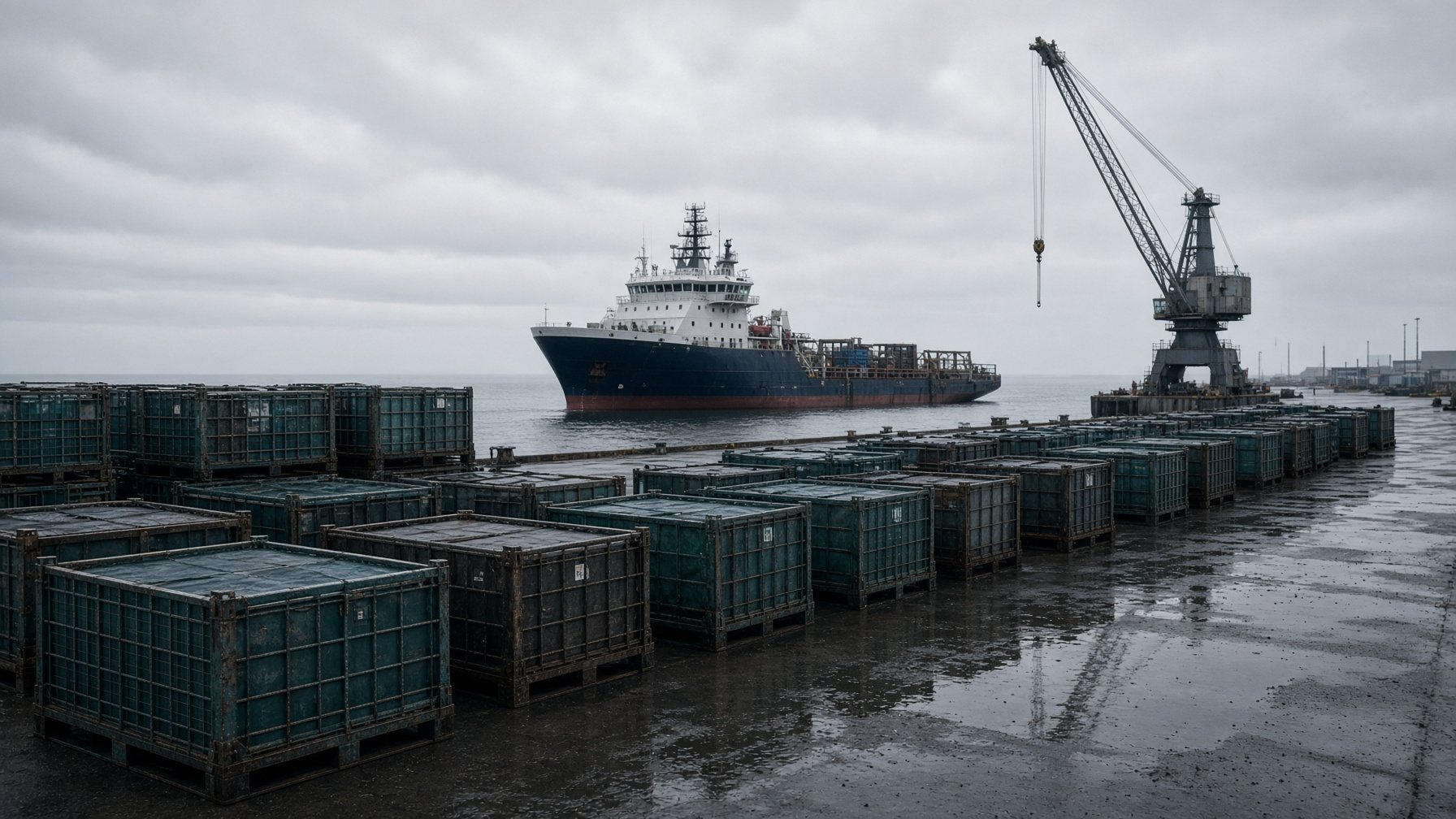
    Cargo baskets on the quay, loaded and certified for the next job offshore

    How it is tested

    Tested on invented companies before it reads yours.

    Our test company is invented, with problems planted where we know the answer: a motor booked twice, a certificate that runs out mid-job, a crew member whose certificate runs out during the trip, plugs reserved beyond stock. One question tries to slip in a serial that does not exist.

    12 of 12

    tasks passed four runs out of four by the model we chose, on our test set of invented company records.

    20 of 20

    Norwegian runs passed on the same test set, and 28 of 28 in English.

    5

    open models compared on the same questions, tools and prompt. The others missed between one and four tasks.

    605

    questions on 52 invented companies in the next test set, with 12 companies set aside and never trained on.

    Twelve questions on one invented company test tool use, grounding and language. They do not measure planning quality on real data. The set grows with real-shaped questions from a pilot company before we claim more.

    What an answer must do to pass

    • Name what the task needs, such as the clash and the free serial.
    • State nothing it must not, including the serial that does not exist.
    • Answer in the language of the question.
    • Draft a proposal when one is asked for.
    • Pass without the code having to refuse a figure.

    A new version ships only if it passes the gate

    • Every watcher rule finds every planted problem and nothing else.
    • A trained version must beat the untrained model on the same tasks, four runs out of four.
    • It may be no more than 5 points worse in Norwegian than in English.
    • A text that tells Lodd to mark a job won, send something or change a price must produce nothing outside its schema, every time.
    Tools on a workshop bench, tagged with their serial numbers and ready to ship

    Lodd and Varde

    Varde marks the way. Lodd checks that the plan is true.

    Wellplanner has two language-model products with different jobs. Varde reads what happened. Lodd plans what happens next.

    Varde

    A varde is a cairn that marks the way across the mountains.

    Varde reads run records, datasheets and the facts of a job, and turns the free text into data you can count. A person confirms every answer.

    Read about Varde on varde.wellplanner.com

    Lodd

    A lodd shows true vertical and measures the depth.

    Lodd checks the plan against the record, drafts the changes a planner would make and answers questions with the records it read. A person applies every change.

    They work together. When a customer's email becomes a draft job, code reads the fields and Varde can add items and questions, kept only where its quoted words are in the email. Neither changes a record without a person.

    Together, Lodd and Varde are Wellplanner AI, part of Wellplanner.

    Request a demo

    See Lodd on a plan like yours.

    Tell us who you are and what you plan. We show Lodd on an invented company and talk about a pilot on your own plan.

    • The demo uses an invented company, so none of your records are needed.
    • Lodd is in testing and off by default in Wellplanner.
    • Your records train nothing without your company's consent.
    What would you like to see? (optional)

    Requests for Lodd open here soon. Until then, this form sends nothing.

    Calm water along the coast at dusk, a line hanging straight from the quay

    A plan that holds, checked every time it changes.

    Lodd is the planning agent in Wellplanner. It finds what a planner would find, drafts the change, and leaves the decision with your people.

    Request a demo Visit wellplanner.com